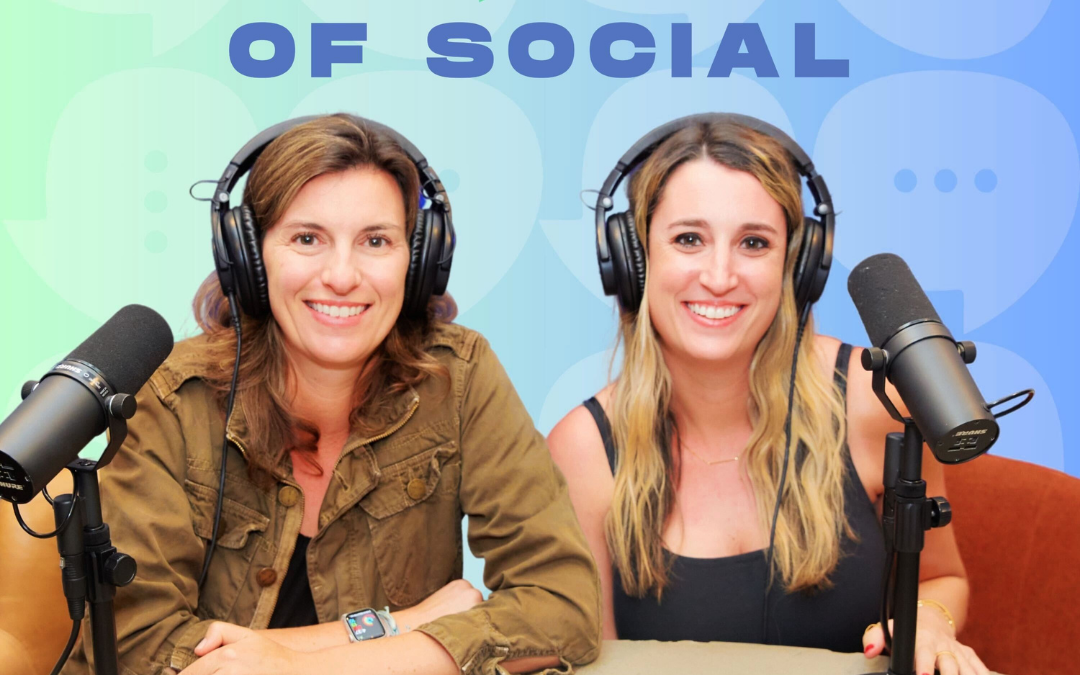
Dose of Social Episode 31: Social Media for Tourism and Travel with Jess Kaplan

Dose of Social Episode 31: Social Media for Tourism and Travel with Jess Kaplan

Social Media for Tourism and Travel with Jess Kaplan

Season THREE | Episode THIRTY ONE


Listen On Spotify

In Episode 32 of Dose of Social, Lindsay Mauch and Kayla Perlstein sat down with Jess Kaplan, Social Strategy Manager at Orange 142, to talk about what it really takes to grow a tourism brand on social media.

Jess leads strategy for Pigeon Forge, a destination known as the gateway to the Great Smoky Mountains and home to Dollywood. With millions of annual visitors and a constant stream of events, attractions, and seasonal campaigns, managing social for a destination like this is no small task.

Here’s what we learned about building a high-performing tourism social strategy.

Reels and Carousels Drive Discovery

Jess emphasized that while every platform plays a role, short-form video is the engine for reach. Reels and TikToks are critical for attracting new audiences, while carousels allow for deeper storytelling.

For destination brands especially, storytelling wins. A single viral moment – like a creator video that reached 50 million views – can directly translate into bookings. But you can’t plan virality. You can only create consistent, compelling content and stay ready to ride the wave when it happens.

Lean Into What’s Working (Even If It Surprises You)

One unexpected hit? A “Chuck Wagon Cook Off” event video that became their first to cross one million views. That single moment helped grow a large portion of their TikTok following.

The takeaway: don’t underestimate niche or “quirky” events. If something resonates, double down. Jess and her team increased promotion around that event in future years because the data validated the interest.

Testing is everything. Not every trend will fit your brand, but when it does, try it.

User-Generated Content Is a Growth Lever

UGC isn’t just a nice-to-have, it’s foundational.

Jess reaches out to fans daily for permission to repost content. That outreach builds trust, strengthens community, and often turns visitors into long-term followers. Beyond social reposts, UGC is integrated into blogs and website content to extend its lifespan.

For tourism brands especially, visitors are your content creators. Lean into that.

Listen On Youtube

Seasonality Should Shape Your Messaging

Tourism marketing is deeply seasonal. Pigeon Forge tailors content by audience and time of year:

  • Spring break & summer: family-focused
  • Fall: couples getaways
  • Holidays: magical winter campaigns

Rather than posting generic content year-round, the strategy shifts based on traveler intent. Influencer partnerships and campaigns are aligned with these seasonal priorities to maximize relevance.

For small destinations, this approach can be replicated on a smaller scale. Focus on what your location does best during each season and amplify that message.

Fresh Content Requires Real-World Presence

Jess and her team conduct content shoots at least once a month, filming new businesses, events, and festivals to keep content fresh for both repeat visitors and new audiences.

Video is captured primarily on iPhone, supported by tools like the Osmo Pocket 3, stabilizers, mics, and lighting. The key isn’t fancy equipment, it’s consistency and hands-on access.

Social media should never be “schedule and forget.” It’s fluid. It requires monitoring, optimizing, and sometimes pivoting in real time (especially in tourism, where weather and announcements can shift quickly).

Actionable Takeaways

  1. Prioritize short-form video for reach, but use carousels for storytelling depth.
  2. Let performance guide your strategy. Double down on content that surprises you.
  3. Actively request permission for UGC and build relationships with creators.
  4. Align content with seasonal travel intent to stay relevant year-round.
  5. Capture fresh content consistently. Social success requires ongoing, real-world activation.

Whether you’re marketing a mountain town or a local business, the fundamentals remain the same: test often, stay nimble, and build strategy around real audience behavior.

And if you ever get a video that hits 50 million views? Ride that wave.

You can find Jess online at https://www.linkedin.com/in/jessicakap/.

Listen On Apple

❤️ Loving the show?

If you enjoyed this episode, please head over to Apple Podcasts and leave a rating. It takes less than a minute and helps us keep creating content.

Dose of Social Episode 31: Social Media for Tourism and Travel with Jess Kaplan

Dose of Social Episode 30: Social Media Scheduling Tools: What You Need To Know

Social Media Scheduling Tools: What You Need To Know

Season THREE | Episode THIRTY


Listen On Spotify

In episode 30 of Dose of Social, Lindsay Mauch and Kayla Perlstein break down what scheduling tools are, why they can be a game-changer for busy brands, and the biggest mistakes to avoid if you decide to use one.

What Social Media Scheduling Tools Actually Do (and why they exist)

At their core, scheduling tools let you plan and publish social media content in advance. Instead of logging in every day to manually post, you can batch your work: write captions, upload assets, choose dates/times, and hit “schedule.” That makes it easier to stay consistent without social media taking over your entire week.

Kayla summed up the biggest benefit perfectly: it’s one more thing off your plate day to day. If your biggest hurdle is simply getting content out the door, scheduling can remove friction and keep you posting regularly.

The Upside: Organization, Batching, and Multi-Platform Posting

One of the biggest wins with scheduling is getting ahead. You can create 10 strong posts, spread them out across two to three weeks, and be done in one sitting. Many tools also allow cross-posting where you can publish one piece of content to multiple platforms (like Instagram, Facebook, and X) without repeating the same steps over and over.

Lindsay also shared an old-school phrase that still applies: “Post Once, Publish Everywhere.” While each platform has its quirks, scheduling tools can streamline distribution when you’re managing multiple channels.

Listen On Youtube

The Downside: Tone-Deaf Timing and “OOPSIES” Mistakes

Scheduling isn’t “set it and forget it.” One major risk is not pausing scheduled content during major news events or tragedies, which can make a brand look out of touch fast. If you’re scheduling content so you can truly be offline (hello, vacation), you need a backup plan—someone who can step in and hit pause if needed.

Another common issue? Drafts or placeholders accidentally going live. Lindsay referenced the famous McDonald’s mishap where unfinished content was posted publicly. The lesson: don’t schedule anything until it’s final, approved, and ready—especially if you have multiple approval layers.

Do scheduling tools hurt reach?

This is the big question. Lindsay shared that, anecdotally, she’s seen content posted through third-party tools perform equal to or less than content posted natively. Kayla agreed the platforms want you to stay on-platform—and that posting natively often gives you access to features schedulers still can’t handle well (like trending Reel audio).

Their advice: if you want to give content the best shot, post natively in real time when possible—or schedule natively using the platform’s built-in tools.

So… should you use one?

It depends. For LTM Digital, tools like Planoly (great for visual Instagram grid planning) and Buffer (an OG) can help. But both Lindsay and Kayla emphasized that most brands can get far using free native schedulers inside Meta, LinkedIn, YouTube, and more—plus a simple Google Sheet content calendar.

At the end of the day, consistency matters more than the tool.

Actionable Takeaways

  1. Use scheduling to stay consistent. If scheduling is what gets you posting regularly, it’s worth it.

  2. Never schedule unapproved content. Keep drafts in draft mode until everything is final.

  3. Don’t “post and ghost.” Even if it’s scheduled, be ready to engage when comments come in.

  4. Have a “pause plan.” Assign someone to pause posts during major events if you’ll be offline.

  5. Test before you invest. Try native scheduling first, then upgrade only if you truly need more features.

  6. Don’t obsess over “best posting times.” Test a few time slots, but focus more on engagement than timing.

Want more social media workflow tips like this? Follow Dose of Social on Instagram and YouTube, and visit doseofsocial.com.

Listen On Apple

❤️ Loving the show?

If you enjoyed this episode, please head over to Apple Podcasts and leave a rating. It takes less than a minute and helps us keep creating content.

Dose of Social Episode 31: Social Media for Tourism and Travel with Jess Kaplan

Dose of Social Episode 29: 20 Years: The Evolution of YouTube

20 Years: The Evolution of YouTube

Season THREE | Episode TWENTY NINE


Listen On Spotify

YouTube turned 20 years old in 2025 and somehow, it’s still one of the most powerful (and misunderstood) platforms in social media.

In Episode 29 of Dose of Social, Lindsay Mauch and Kayla Perlstein dig into why YouTube remains such a critical social media channel for brands, how it’s evolved over the last two decades, and why short-form video has made YouTube more accessible than ever for businesses of all sizes.

From Zoo Videos to the World’s Second Largest Search Engine

YouTube began with a simple goal: to make it easy for people to upload and share video. In the early days, uploading video was clunky, required special cameras (hello, Flip Cam), and definitely didn’t live on your phone. Once Google acquired YouTube in 2006, everything changed.

Backed by the world’s largest search engine, YouTube became a destination not just for entertainment, but for answers. Today, “how-to” videos, reviews, tutorials, and explainers thrive because people actively search for them. If you’ve ever Googled how to assemble furniture, fix an appliance, or use a new product, you’ve likely landed on YouTube.

That’s what makes YouTube different from platforms like Instagram or TikTok: intent. People go to YouTube looking for something specific.

Why YouTube Matters for Brands in 2025

For years, brands asked, “Do we really need YouTube?” The answer used to depend on whether you could produce long-form video regularly.

That’s no longer the case.

Today, if you’re on social media at all, you’re already creating video and that  means you’re already creating YouTube content.

With the rise of YouTube Shorts, brands can now upload vertical, short-form videos (similar to Reels and TikTok) without reinventing their strategy. YouTube has adapted to how people consume content, and YouTube Shorts have opened the door for brands that previously avoided the platform.

Even better? There’s a massive audience on YouTube that isn’t watching Instagram Reels or TikTok. Roughly 40% of YouTube users don’t engage with those other platforms at all. Posting on YouTube helps you reach people you’d otherwise never touch.

Listen On Youtube

Search, Keywords, and Discoverability

YouTube is a search engine first and a social platform second. That means keywords matter. They matter a lot.

Titles, descriptions, and tags help YouTube understand who to show your content to. Brands that take the time to write keyword-rich titles and descriptions consistently see stronger performance. Adding links in descriptions (to your site, products, or long-form videos) also turns YouTube into a traffic driver, not just a visibility play.

Shorts, Ads, and Smart Repurposing

YouTube Shorts don’t just support organic reach. They also integrate seamlessly into Google Ads Performance Max (PMAX) campaigns. If you’re already running Google Ads, uploading short-form video allows your content to appear across YouTube placements automatically.

Brands that aren’t “YouTubers” are often surprised by how well their repurposed content performs once it’s uploaded. Same video. New audience. Bigger reach.

Getting Started Without Overthinking It

There’s no perfect moment to start YouTube. Ideally, you’d launch with a few videos, but one is enough. Use your existing profile image, resize your banner, and hit publish. You can always improve as you go.

As Lindsay says, “The secret to getting started is to start!” 

Actionable Takeaways

  1. If you’re already creating video, you’re ready for YouTube. Repurpose Reels and TikToks into YouTube Shorts.

  2. Optimize for search. Use keyword-rich titles, descriptions, and tags to increase discoverability.

  3. Watch your music choices. Avoid copyrighted audio when uploading to YouTube.

  4. Link strategically. Add links to your site, products, or long-form videos in descriptions.

  5. Don’t wait for perfection. Start with what you have and refine as you go.

If YouTube isn’t part of your strategy yet, now’s the time. It’s not going anywhere, and your audience is already there. 

You can find the Dose of Social Podcast on YouTube here.

Listen On Apple

❤️ Loving the show?

If you enjoyed this episode, please head over to Apple Podcasts and leave a rating. It takes less than a minute and helps us keep creating content.

Dose of Social Episode 31: Social Media for Tourism and Travel with Jess Kaplan

Dose of Social Episode 28: Julia Fowler and the Unexpected Viral Social Media Success of The Southern Women Channel

Julia Fowler and the Unexpected Viral Social Media Success of The Southern Women Channel

Season THREE | Episode TWENTY EIGHT


Listen On Spotify

In Episode 28 of Dose of Social, Lindsay Mauch and Kayla Perlstein sat down with Julia Fowler, creator of Southern Women Channel. She shares how her signature, bite-sized Southern humor became a viral internet staple and what it really takes to create content that’s consistent, authentic, and actually enjoyable to make.

Julia’s story is a good reminder that sometimes the best brands aren’t built from a perfectly polished business plan. They’re built from a point of view, a strong voice, and a deep understanding of the audience you’re speaking to.

A “One Video” idea that turned into a 14-year brand

Julia is a South Carolina native who spent nearly a decade in New York City working on Broadway and in musical theater before moving to Los Angeles. While LA opened doors—TV, film, writing, it also introduced a familiar tension for Southerners in entertainment: her accent made her memorable and sometimes cost her roles.

In 2012, homesick and inspired by the early YouTube era, Julia noticed a viral meme floating around online (“Stuff People in LA Say”) and realized something important: nobody was celebrating the South in that same way. So she made her own version, pulling in a few friends, filming on a rented camera (yes, a real camera), and uploading it to YouTube without any real strategy.

She even launched it on Halloween, which, in her words, is basically the worst possible “marketing day” because no one’s home. But it didn’t matter. The video took off immediately. The video had 50,000 views within hours, then 100,000, then 200,000… and nearly a million within about 24 hours. It landed on the YouTube homepage, caught the attention of major outlets (including The Today Show), and ultimately sparked a new creative lane that Julia’s manager encouraged her to take seriously.

And just like that, Southern Women Channel was born.

Why her channel works: the difference between laughing at vs. laughing with

Julia is crystal clear about something that a lot of creators miss: Southern humor only works when it’s rooted in love. There’s a fine line between highlighting stereotypes for comedy and making people feel mocked, and she’s been protecting that line since her early screenwriting days.

She shared how, when she sold her first Southern comedy screenplay to New Line Cinema, the notes process exposed how often outsiders misunderstand Southern culture. That experience made her even more committed to creating content that feels celebratory, not condescending.

Troll comments about her “fake accent” don’t rattle her (she’s got what she calls “rhinoceros skin” after years in entertainment), but she does take tone seriously because her audience does, too.

Listen On Youtube

The content process is way more intense than it looks

One of the biggest takeaways from this conversation: comedy that feels effortless is usually the most engineered.

Julia’s flagship series is complicated to produce because each quick line requires a setup. That means different locations, wardrobe changes, and a cast that now lives across multiple states (South Carolina, Nashville, Los Angeles, and beyond). Julia writes the scripts, produces the shoots, coordinates schedules, directs, and edits—often building episodes from hundreds of lines to create a specific rhythm she calls “Southern spoken word.”

After she finishes a long-form YouTube video, she and Kayla repurpose it into short-form clips for Instagram, TikTok, and other platforms, strategically resurfacing older content for new audiences discovering her work for the first time.

And despite all that effort, Julia has intentionally kept the channel more like a creative playground than a full-time job because the moment it becomes the only income source, the pressure (and burnout risk) skyrockets.

The Offline Impact Is The Part That Keeps Her Going

Even though she doesn’t get recognized much in LA, Julia is increasingly recognized in the South at restaurants, in airports, and even while getting her hair blown out. Those moments matter because content creation is isolating. You’re editing alone, writing alone, producing alone, and it’s easy to forget anyone is on the other side of the screen.

But the most meaningful messages she receives aren’t about views, they’re from people watching her videos during chemo, or families sharing her content with loved ones in the hospital to make them laugh. That’s when the work becomes more than content. It becomes about connection.

Before wrapping, Kayla asked one final “Southern woman” question: what’s the one thing a Southern woman always has in her purse?

Julia’s answer: lipstick. Always.

Actionable Takeaways

  1. Build from a real point of view, not a trend. Julia’s channel worked because it came from lived experience and genuine cultural pride and not because she chased what was “performing.”

  2. Treat content like a system, not inspiration. Her master Google Doc of sayings and audience-submitted ideas removes the pressure to “think of something” every time she posts.

  3. Make long-form once, then repurpose intentionally. Julia creates a big YouTube video, then strips it into reels and clips—mixing new and older content so her library keeps working for her.

  4. Protect your tone, especially when using humor. If you’re building a brand around culture, identity, or lived experience, make sure the audience feels included, not targeted.

  5. Plan around bandwidth to avoid burnout. Julia’s secret weapon is boundaries: she creates when she has capacity, banks content ahead of busy seasons, and keeps the work joyful.

If you want to connect with Julia, you can find her across platforms at Southern Women Channel, plus her site southernwomenchannel.com, where you can also check out her books Talk Southern to Me and Embrace Your Southern.

Listen On Apple

❤️ Loving the show?

If you enjoyed this episode, please head over to Apple Podcasts and leave a rating. It takes less than a minute and helps us keep creating content.

Dose of Social Episode 31: Social Media for Tourism and Travel with Jess Kaplan

Dose of Social Episode 27: From Netflix to Home Organizing with Kylie Wade

From Netflix to Home Organizing with Kylie Wade

Season THREE | Episode TWENTY SEVEN


Listen On Spotify

In Episode 27 of Dose of Social, Lindsay Mauch and Kayla Perlstein sit down with Kylie Wade, co-founder of Organizing for Life, to talk about what it really takes to grow a home organization, service-based business through social media without getting swallowed by the algorithm, comparison, or perfectionism.

Kylie’s path to entrepreneurship is a reminder that careers can evolve in surprising ways. She started with a marketing and PR degree, moved to Los Angeles for an internship, and built a career in media and tech, working at Tennis Channel, NFL Network, and eventually Netflix for seven and a half years. But the throughline, she explains, wasn’t always social media. It was project management and systems and later, a deep desire to do work that felt meaningful.

That “meaning” clicked when Kylie began organizing spaces and saw the real impact it had on people’s lives, helping clients regain access to rooms they hadn’t used in years and creating systems that made day-to-day life easier. When tech began to feel volatile and disconnected, organizing lit her up in a way her corporate job no longer did. She made the leap, built her business steadily, and eventually brought on a partner to avoid “imploding” under the weight of doing everything alone. The result is a growing business that now offers in-home organizing, concierge moves, maintenance programs, and more.

When it comes to marketing, Kylie is honest and shares that Instagram has been her main platform and a major lead driver, but she’s learned the hard way that trying to do every platform at once can turn you into the “master of none.” Her approach is to prioritize what works now (Instagram), repurpose where possible (like Google Business Profile), and plan for long-term expansion (Pinterest and YouTube Shorts) once the foundation is stronger.

One of Kylie’s most practical insights is how she balances aesthetic content with real life. In organizing, “perfect” spaces can feel aspirational, but not always functional. Kylie leads with “after” photos to catch attention, then reveals the transformation through before-and-after carousels, consistent angles, cover images, and a simple content rhythm to keep the grid visually cohesive. At the same time, she keeps messier, more casual behind-the-scenes moments in Stories so her brand stays both polished and has a human touch.

Listen On Youtube

Kylie also shared a smart reality check about virality: sometimes the content that takes off isn’t what you expect. One of her most viral posts came from calculating the long-term cost of a storage unit. The post sparked debate, drew criticism, and still delivered reach. Her takeaway? Don’t fear engagement (even spicy engagement), but protect your clients’ privacy and comfort. Content boundaries, media releases, and incentives for sharing can all help.

Finally, her advice for anyone building a service business is simple and powerful: social media is your portfolio, not your worth. Use it to show your work, build credibility, and support a broader marketing engine, especially an email list you actually own.

Actionable Takeaways

  1. Treat Instagram like your resume. Use it as a portfolio that proves your work and builds trust before the discovery call.

  2. Build an email list from day one. Social audiences are borrowed; email is owned and protects you from platform changes.

  3. Create a simple content system. Rotate 3 content types (ex: projects, process, products) to stay consistent without burnout.

  4. Balance polish + authenticity strategically. Keep the feed curated, and use Stories for behind-the-scenes and personality.

  5. Repurpose your best content. Post before/afters to Google Business Profile and other channels to diversify lead sources.

You can find Kylie on Instagram at https://www.instagram.com/organizingforlife.

Listen On Apple

r-activation" src="https://embed.podcasts.apple.com/us/podcast/bookkeeping-tips-every-entrepreneur-should-know-with/id1775021753?i=1000715400308">

❤️ Loving the show?

If you enjoyed this episode, please head over to Apple Podcasts and leave a rating. It takes less than a minute and helps us keep creating content.